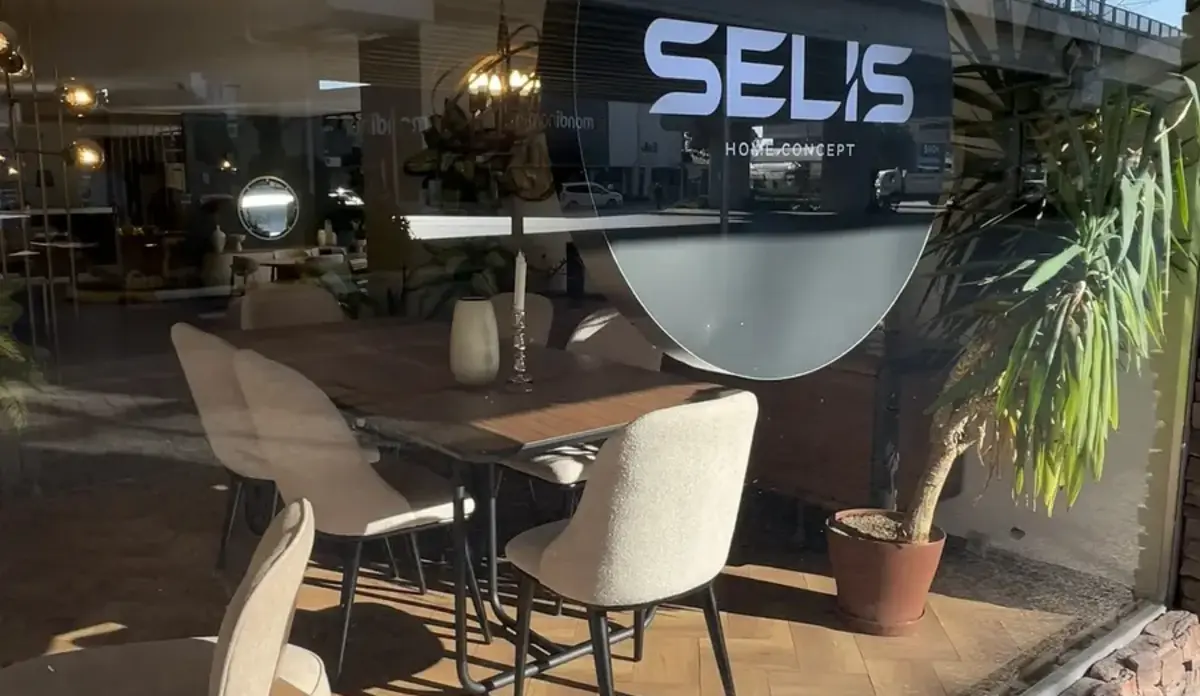
"I saw the same thing cheaper online." Everyone who works in a furniture store hears this. Most of the time the customer is right — it really is cheaper. A large part of the difference comes from the fact that the piece is standing in a showroom.
Display is a cost line nobody in this industry talks about. Here is how it works.
The piece on display is not there to be sold
The sofa you see when you walk into a store is not the one that will come to your home. It is the sample: there so you can touch it, sit on it, see the fabric.
But that sample is not free. The store bought it, paid for it, and will hold it for months.
In an average store a display piece stands there for months, often more than a year, until a new model takes its place. For all that time, the money is tied up.
What happens in the end?
A display piece is no longer new. It has been sat on, the fabric has seen sun, the arms have worn. It cannot be sold at the price of a new one.
So display pieces leave at a discount. The margin evaporates there, and often it is a loss.
Where does that loss go? Into the price of everything else that sells. A store has to cover the cost of display overall, or it cannot keep products in the window.
So the price of what you buy in a store includes the cost of the sample you touched.
It is also why some models "run out"
Customers often ask: "why is the model I looked at last year gone?"
Usually because production of it stopped. What remains are the display pieces in stores. When those sell, the model is genuinely finished.
So when you point at a piece in the window and say "order me one", the answer is sometimes "once this is sold, there are no more". That is not a scarcity tactic; the product's life has ended.
Why can the online price be lower?
No display cost. A seller who sells without showing keeps no sample and does not pay that line.
No store overhead. No rent, no window, no team — and therefore none of their share in the price.
No service. No conversation about size, no fabric to see, and assembly and after-sales are often out of scope.
And sometimes it is not the same product. Two pieces that look identical can differ in frame, foam density or fabric class. You cannot see it from outside.
So a price gap does not always mean someone is overcharging. Often you are buying two different things.
Is buying the display piece a good idea?
Usually yes — with a few checks.
- How long has it been standing there? Three months and eighteen months are very different.
- Was it in the sun? The fabric may have faded on one side.
- Do the mechanisms work? Have them open the sofa bed in the store.
- How will the warranty work? Get the start date and scope in writing.
- Is the discount real? Ask the price of the same model new and see the gap yourself.
In a store that answers those clearly, a display piece is often a good buy.
Last word
A showroom is a cost in this trade, but it is also the only place a customer can touch the product.
Furniture is one of the hardest things to buy from a photograph: you cannot judge firmness without sitting, fabric without handling it, or fit without measuring. The display cost inside the price is really the price of that knowledge.
The other items that make up a price: What makes furniture prices vary?