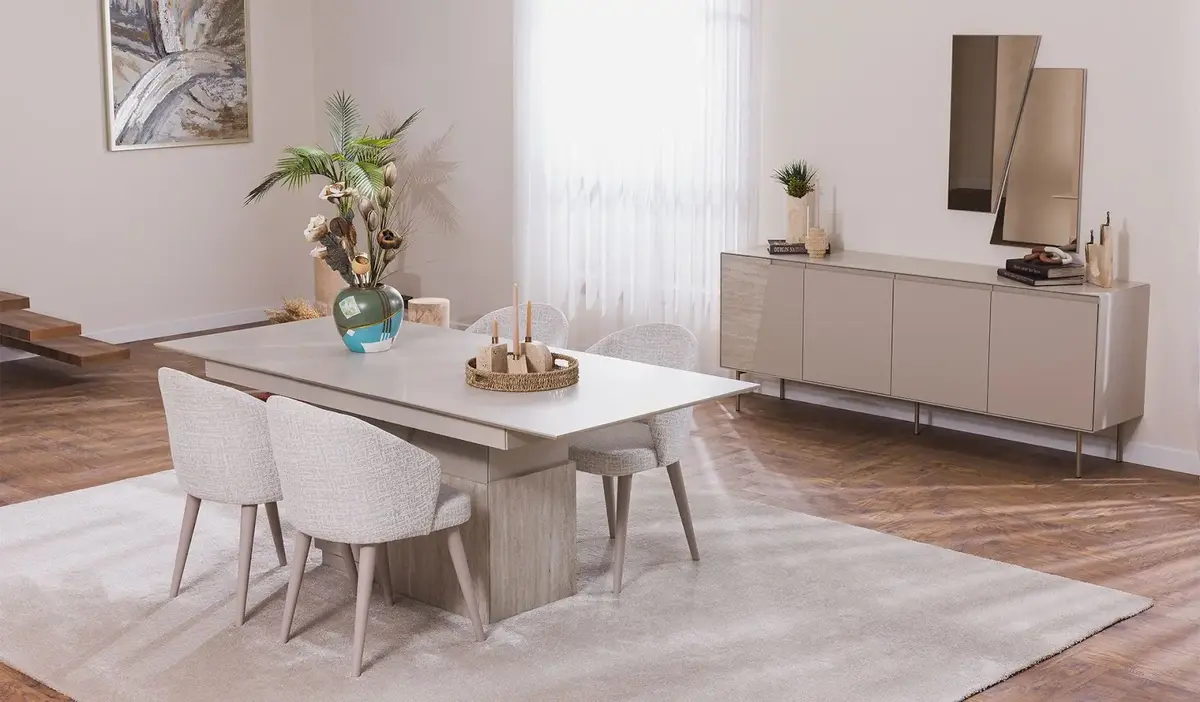
Most of the furniture sold in Turkey is made in İnegöl. Yet most of the furniture brands people can name are associated with other cities. Production is here; the brand is somewhere else.
Seen from inside the industry, this is not an accident. There are reasons, and all of them are understandable ones.
First, the scale
The İnegöl Chamber of Commerce and Industry lists 2,005 active businesses across furniture-related trades: manufacturing, upholstery, wholesale and retail, export, decoration.
What that number means is this: here, furniture is not an occupation but a culture. Half the people you meet work in it. No other town in Turkey has that density.
In a place like that, plenty of people know how to make a product. Far fewer know how to explain one.
1. A production culture, not a marketing culture
Making a good product earns respect in this town. People talk about a craftsman's word, the strength of a frame, the neatness of a seam. So far, so good.
But the same culture finds explaining the product slightly unnecessary. The common belief is: "good goods sell themselves."
That was true thirty years ago. The buyer came to the shop, touched the piece, knew the maker. Today the buyer looks at a phone first. Nothing sells itself on a phone; only an explained product does.
2. Contract manufacturing is safer than building a brand
For a workshop, the safest business model is producing for someone else's brand. The order arrives, it is made, it is invoiced. No marketing spend, no shop rent, no customer complaints, and one party to collect from.
Building a brand is the opposite: you spend first and recover later, if at all. Advertising, a store, a team, after-sales service — all paid before anything is sold.
For a workshop that grew on its own means, avoiding that risk is a rational choice. But the sum of those choices is a town that stays invisible.
3. Brands form where the customer conversation happens
Customers remember whoever sold them the piece. The store that buys in İnegöl and sells in its own city is the one doing the talking: it asks about dimensions, shows the fabrics, handles delivery, and takes the call when something goes wrong.
So that is where the brand forms in the customer's mind. The name of the workshop that made the piece is usually never heard.
This is not about bad faith. A brand is built where the contact is — and the contact is at the point of sale.
4. Cash flow makes long-term thinking hard
A brand is a long-term investment that pays back over years. Cash flow in this industry is short-term: buy timber, pay labour, build the piece, wait to be paid.
When the market tightens, that cycle tightens with it. And a business under pressure picks the work that saves today, not the work that pays off in three years.
The unexpected result of competition
There is one development that turns this picture around.
In recent years the market narrowed and competition inside İnegöl sharpened. The expected result was falling quality — cheaper materials, thinner corners. In some places that happened.
But the real result came from elsewhere: design jumped. With forty firms on the same street making similar products, the only way to stand out was design. The upper-segment models coming out of İnegöl today are in a different place from a few years ago. Speaking as someone inside the industry: in design we have come close to the level of the countries we used to take as our example.
So the problem is no longer the product. The problem is that nobody knows whose product it is.
How this changes
Explain the product. Writing down what the frame is, what the foam density is, how durable the fabric is costs nothing. The number of firms that actually write it is still very small.
Make direct contact with the customer. If brands form where the contact is, then the city that makes the product needs points of sale too. That does not have to mean a store; any channel where the customer finds a counterpart counts.
Own the town's story. İnegöl's furniture history is not a marketing device but a real accumulation. Nobody has a monopoly on telling it — and almost nobody is telling it.
Last word
Picture a town that makes most of a country's furniture, holds more than two thousand businesses, and has pushed past its own class in design — while its name does not appear on the product.
I am not writing this as a complaint. I am writing it as someone who lives here and does this work, and who thinks it should change. A sector whose production is here can have its brands here too. There is no technical obstacle; only habit.