Everyone thinks they know where furniture gets made in İnegöl. So did I. Then we went through the addresses of every furniture firm on the member lists of the İnegöl Chamber of Commerce and Industry, one by one, and the picture turned out sharper than I expected.
A short version of this work ran as a news story on İnegöl Online (in Turkish) on 8 October. Here I set out all the figures and what I take from them.
How we counted
The source is the Chamber's occupational group member lists dated 9 March 2026. There are 2,017 firms registered in the furniture groups. We sorted each firm's registered address by neighbourhood, street and industrial zone. No estimates and no survey; only the Chamber's own record.
One caveat: a registered address is not always where production happens. Some firms have an office in one place and a workshop in another. Even so, across two thousand firms the pattern is plain.
Two firms in five are in a single neighbourhood
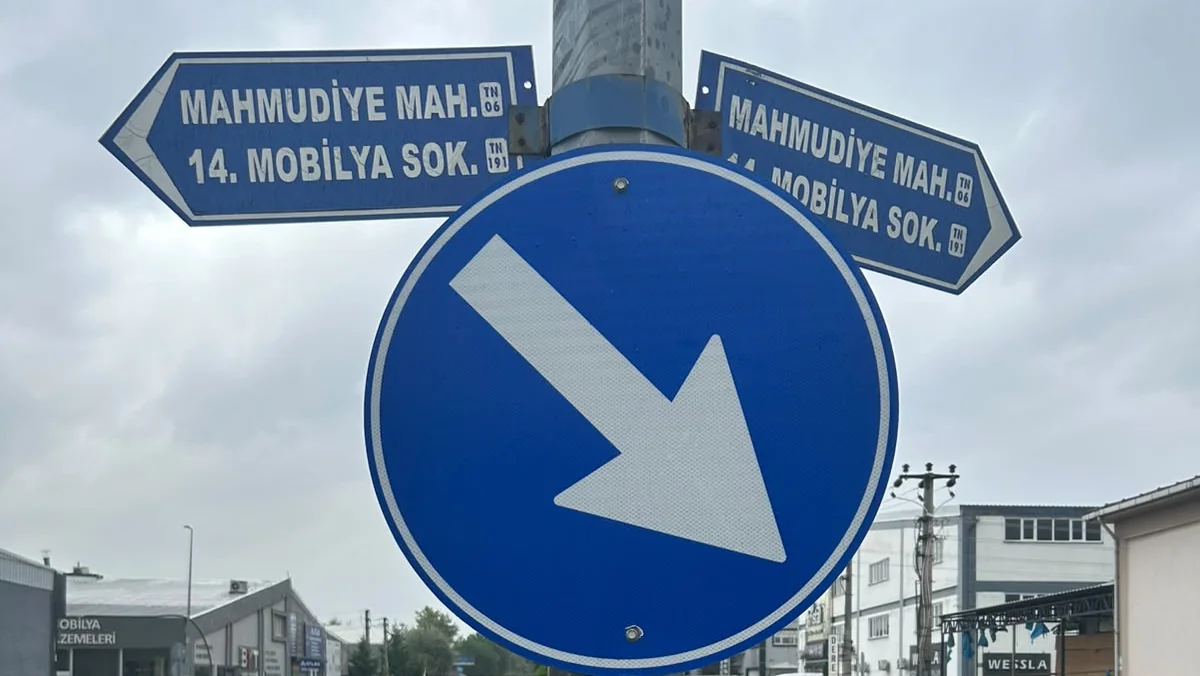
Of the 2,017 firms, 780 are in the Mahmudiye neighbourhood. That is 38.7 per cent of the total. Then come:
- Yeniceköy: 236 firms
- Süleymaniye: 171 firms
- Hamzabey: 153 firms
- Akhisar: 115 firms
- Cerrah: 104 firms
The concentration does not stop at the neighbourhood. Of the 780 firms in Mahmudiye, 403 have an address on a street or avenue with "Mobilya" (furniture) in its name. Inside one neighbourhood, on a handful of streets named after the trade, four hundred firms sit side by side.
The organised industrial zones hold 249 registered firms: 151 with a Hamzabey zone address and 80 in the Süleymaniye zone. The large factories are there, but by count the weight is still in the neighbourhoods inside the town.
"A town of workshops" does not match the records
The phrase most often used for İnegöl is "a town of small workshops". The records say something else.
Of the 2,017 firms, 1,588 are limited companies, which is 78.7 per cent. Another 127, or 6.3 per cent, are joint-stock companies. Sole proprietorships account for only 15 per cent. The most incorporated group is Furniture Wholesale and Retail, at 82.9 per cent limited companies.
Workshops exist, of course; furniture is still made by hand, by craftsmen. But behind most of those workshops stands a company with books and a tax registration. For a buyer the meaning is simple: you are usually dealing with a legal entity, a firm that issues an invoice and signs the guarantee.
Why the density matters
Hundreds of firms on the same streets looks like a crowd from outside. From inside it is a production line.
Timber, foam, fabric, legs and haulage are all within the same few kilometres. Everything a model needs is within walking distance. When a part is missing you do not wait days, you fetch it that afternoon. That is why lead times can stay shorter here than elsewhere.
The second effect is competition. Hundreds of firms see each other's showrooms every day. When a good idea appears in one model, the neighbour notices within a week and tries to better it. That pressure pulls design upward. If İnegöl today produces models at every level from the most economical to the upper segment, this closeness is the reason.
The third is knowledge. When a craftsman leaves one workshop for another two streets away, he takes what he knows with him. Nobody teaches this in a school; the town teaches itself. That is why furniture in İnegöl is less a profession than a culture.
What changes for the buyer
One of the questions I am asked most is still: "Is it risky to buy furniture from İnegöl?" After these figures I think the question itself is wrongly put.
In a place with two thousand firms, "İnegöl" is not one level of quality or one level of risk. On the same street there are firms doing excellent work and firms doing careless work. The question to ask is not "should I buy from İnegöl" but "who am I buying from".
The ways to find out are clear: whether the firm is a registered company, whether it gives its guarantee in writing, who answers the phone after the sale, who takes responsibility for delivery and installation. The name of the town will not tell you these things; the firm itself will.
Why counting helps
When we talk about a sector most of us talk from memory. Lines such as "there are so many firms in İnegöl", "they are all workshops", "they are all in the industrial zone" have circulated for years and nobody goes back to count. When you do count, some of those lines hold and some collapse.
I plan to repeat this count every year with the same method. Is the number of firms growing, is the weight shifting from the neighbourhoods to the industrial zones, is incorporation continuing; we can only see these by looking year on year. The full tables and the method are open on the İnegöl furniture data 2026 page for anyone who wants to run their own numbers.