When people ask how long I have been in the furniture business, I say "since I was born" and they assume I am exaggerating. I am not. My family has worked with wood for roughly 150 years, and in that time the work changed shape three times.
I am not writing this to boast. I am writing it because in this trade, knowing who you are buying from matters before the price does.
A family of loggers in the Achara mountains
The story does not begin in İnegöl. It begins in the Achara mountains, in what is now Georgia — forested country. My great-great-grandfather was a logger there.
After the Russo-Turkish war of 1877-78, the family crossed into Anatolia as war refugees and settled in İnegöl. I do not know what they brought with them; I know the only thing they could bring was the work they knew.
The most sensible thing a refugee family can do in a new town is rebuild the trade it already understands. That is what they did. İnegöl was surrounded by forest, and logging was enough to start again.
Timber, lumber, furniture: each generation one step further
In the generations that followed, the work stayed with the same material but climbed one step each time.
My grandfather's father continued logging in İnegöl. My grandfather began turning logs into lumber — cutting raw material into something measured and sellable. My father turned lumber into furniture.
Those three steps sound simple, but each is a separate craft with its own customers and its own risks. Pulling a tree out of the forest is not the same as drying and cutting it properly. Cutting lumber is nothing like making something that will stand in someone's living room.
If I can look at the frame of a sofa today and say "this timber was not kiln-dried, it will creak in two years", I did not learn that on a course. It was what got talked about at home.
Why İnegöl became a furniture town
The whole town followed a similar path. In a place ringed by forest came lumber first, then workshops, then factories. Today the İnegöl Chamber of Commerce and Industry lists more than two thousand active businesses in furniture-related trades.
That density had two effects. First, competition: when forty people on the same street do the same work, bad products do not last. Second, knowledge: anyone who grows up here learns by conversation which fabric lasts and which mechanism fails early.
Most of Turkey's furniture is made here, while most of the brands sit in other cities. That has always struck me as odd — production here, the name elsewhere.
2020: the same work, a new door
In 2020 all of this came together under Selis Koltuk Mobilya A.Ş. as the brand Selishome. Selishome is our family business, and I run it today.
Let me be plain about something the industry often gets wrong: we are retailers. We buy our products from workshops in İnegöl.
I am not trying to hide that, because there is nothing to hide. A workshop makes one or a few models; you cannot line forty of them up and compare, it will not discuss the size of your living room with you, it does not chase the delivery, and when a mechanism fails six months later there is no number to call.
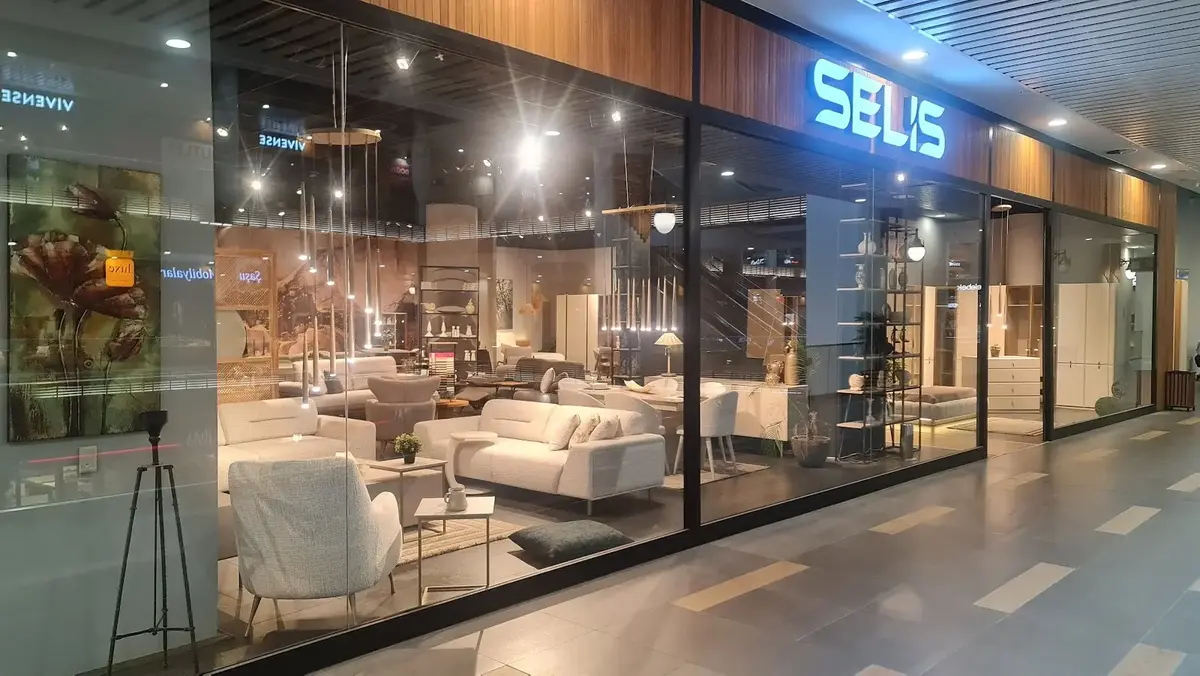
Our work is exactly there: choosing the right product and standing behind it. Every model that enters the catalogue stands in our own store first; we look at the fabric, the frame and the foam density ourselves. We do not sell what we would not keep.
What my family accumulated over 150 years is not a factory. It is the habit of knowing what you are looking at when you look at wood. I use it when I choose products.
What we do today
We have three stores: Mobiliyum AVM in İnegöl, Home City AVM in Pendik, Istanbul, and Antalya. Alongside them we deliver and assemble anywhere in Turkey through selishome.com.
We also build the systems behind the business ourselves: the software that takes the order, follows production, and runs shipping and after-sales is ours. That is unusual in this trade, but the reason is simple — when a customer asks where their order is, the answer has to live in one place.
Why I am telling this
Furniture is an expensive, once-a-decade purchase that is hard to undo. In a purchase like that, what people want most is to know who they are dealing with.
You are dealing with the current form of a family that has worked the same material for five generations. What we did before is on the record; we will be in the same town afterwards.
That is the strongest reference I have. Nobody can buy a 150-year-old habit with a campaign.